
By Stoney Tark
One of the easiest and most rewarding ways to boost yields is to use plant-training techniques. There are many different techniques ranging from topping, fimming, low-stress training (LST), super cropping, and pruning. Knowing when to implement them can significantly boost yields and change the shape and structure of your plants.
#1: Ideal for Small Grow Spaces
Cannabis plant training techniques are ideal for growers with limited space, especially for height control. Plant training is advantageous for maximizing grow space, light coverage and penetration, and controlling the final height of the canopy. Of course, growing indica-dominant hybrids is also be beneficial.
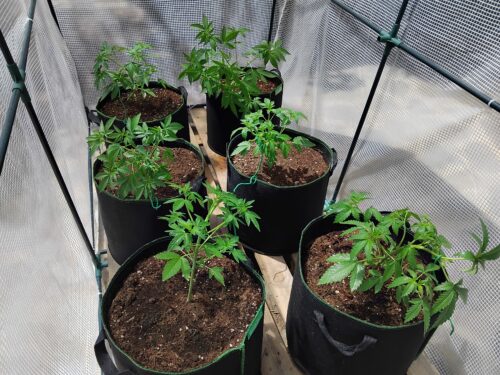
Cannabis plants are in a small grow tent in soil pots ready to be trained to increase yield. Photo: Stoney Tark
#2: Train During Vegetation
Do all plant training during the vegetation stage when the timer is set to an 18-hour on and 6-hour off light cycle. During vegetative growth, plants focus on node development, side branches, leaves, and roots. Training plants after switching timers to a 12-hour on and 12-hour off light cycle may cause stress, especially when using high-stress techniques such as topping and super cropping.
#3: Recovery Time
The robustness of your plants determines how quickly they recover after each plant training technique. Give plants five to seven days to fully recover and bounce back from low- and high-stress training methods.
Cannabis plants that are not given adequate recovery time may become damaged and weak. Some plants may also be more resilient to training than others. Trial and error may be required to find which techniques work best for each plant.
#4: Topping
“Topping” means cutting away the shoot at the crown node, which allows you to increase the number of nodes on the plant and produce a bushy,
top-heavy canopy. Topping is an excellent way to reduce plant height, and it can be done multiple times during vegetation. Not only does topping increase the potential number of flowering sites, but it also promotes thick side branches capable of supporting substantial weight.
#5: Use Thick Wire for Low-Stress Training (LST)
There are different ways to tie down plants, and the most common way is to use gardening wire. I have learnt over the years that using a thick rubber-coated gardening wire works best for the low-stress method, and prevents thin wire from growing through and slicing through the stem or side branch. The good thing about using thicker wire is that it is easy to unwrap and remove loops, and it does not cut through the plants.
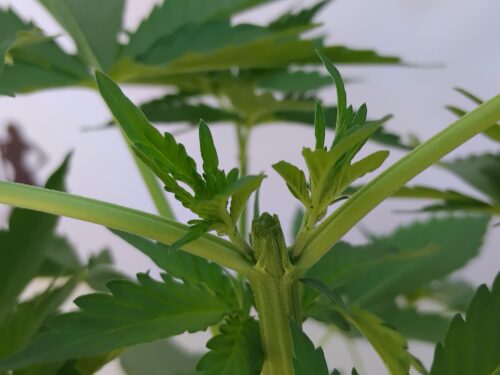
Topping photo by Stoney Tark
#6: Try Multiple Plant Training Techniques Together
If you really want to get hands-on with your plants, what better way than to apply as many different plant training techniques as possible? All plant training should be done during vegetation, and when combined, it gives you the chance to create the shape and structure that works best for you. Be prepared to try topping, fimming, LST, pruning, and super cropping once your plants are three or four weeks old.
#7: Prune Before Flowering
Many growers prefer to prune their plants once they have set their timers to a 12/12 light cycle. They wait for the plants to stretch before pruning away the lowest growth. An easy way to prune is to strip to one node using a sharp scalpel one week before inducing flowering.
Although stripping away 80% or more of the foliage may seem counterproductive, it allows plants to focus all their energy on a top-heavy harvest. In addition to eliminating the concern of small “popcorn” buds growing, it improves airflow and eliminates the need for pruning during the flowering stage. Pruning and defoliating autoflowers is recommended; however, it should be done during the first four weeks of growth.
#8: Super Crop for Robust Plants
Kyle Kushman is well known for his stem-snapping training method, which may seem brutal and stressful; however, it encourages plants to become tough, resilient, and robust. Super cropping involves purposely breaking the inner cell wall of the stem or side branch. The plants respond to the twist-and-snap motion by sending repair hormones to the broken site.
It takes about 7–10 days for the plants to form a thick wooden knuckle as a support system. The super crop technique is easily the most difficult to master. Still, once you get it right, the difference is incredible in terms of plant vitality, growth rate, and yield potential.
Take Your Indoor Garden Further
If you want structured guidance beyond trial and error, Oaksterdam’s Home Grow course walks you through setting up and running a productive indoor garden from seed to harvest. When you’re ready to turn that experience into job-ready skills, the Commercial Horticulture Worker program adds live instruction, hands-on learning, and the practical training you need to step into a professional grow with confidence.
Use code “tark10” at checkout to save 10% on your enrollment in either course