
by Stoney Tark
Cannabis plants traditionally referred to as “indica” adapted to harsh, mountainous regions such as the Hindu Kush in the Himalayas and parts of Afghanistan. These environments shaped hardy landrace genetics that flower quickly, stay compact, and feature short internodal spacing.
When grown indoors, indicas are known for producing dense, heavy flowers and thriving in controlled environments. The following tips will help you grow better indica indoors:
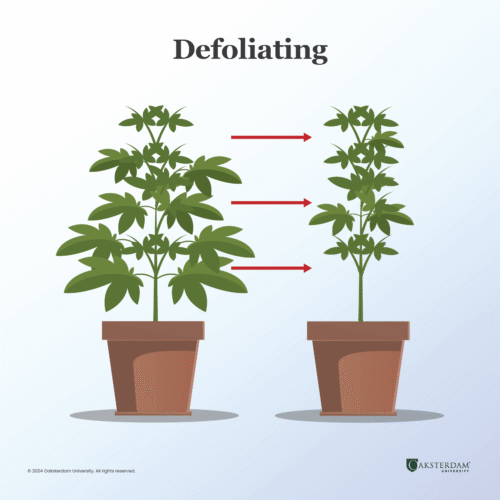
Defoliation can concentrate growth to the flowers.
Defoliation and Pruning
A common challenge with indica-dominant plants is their large fan leaves, which can block light from reaching the lower canopy. While it may feel counterintuitive to remove leaves that capture light, selective defoliation can greatly improve light penetration and airflow.
Only remove fan leaves that are clearly obstructing flower sites or restricting airflow, and avoid excessive defoliation. Cannabis leaves play a major role in how much light the plants absorb; however, with indica plants, it is best to defoliate and carefully prune the larger fan leaves from week 3 onwards.
Short Internodal Development
Indica cannabis plants will produce short internodal spacing during the vegetative stage, and will not stretch much compared to hybrid or sativa plants. This means indica plants tend to grow with a compact, dense, bushy appearance.
Indica-dominant plants usually double in size during this period. Plan ahead by leaving enough vertical space and, if needed, extending the vegetative phase slightly to shape the plant before flowering. Growers with limited height will find indica plants more advantageous and easier to maintain.
Fast Flowering Indica Plants Outdoors
Indicas are a smart choice for home cultivators growing in gardens, on terraces, or on balconies. Their compact size and fast flowering times make them discreet and easy to manage, and with the right plant training techniques, you can produce a plant that does not exceed 150 cm in height once flowering.
Planting indica strains during spring or early summer can result in tough, resilient, low-profile plants that don’t tower over surrounding vegetation. Indicas are a great choice for growers who experience short summers and need something that matures within 7-8 weeks of flowering.
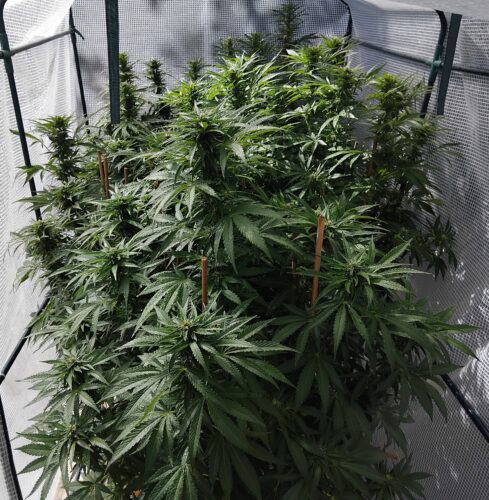
Photo: Stoney Tark
Indica Plants Using a Sea of Green Setup
Indica plants are ideal for Sea of Green (SOG) growing thanks to their short, stocky structure and limited stretch. This method involves cultivating many small plants close together to maximize yields in a limited space. SOG is one of the best ways to maximize yields, shorten the vegetative period, reduce electricity bills, and allow a quicker crop rotation.
For best results, arrange plants in rows such as 4×4, 5×5, or 6×6, allowing you to fully utilize your grow area and achieve consistent, heavy harvests. Make sure that you leave plenty of room to work.
Plant Training for Canopy Control
Topping involves removing the main growth tip of a plant, encouraging two main colas to form instead of one. This technique works especially well with indicas, helping control final plant height and creating a more even canopy. For best results, top plants once they reach 6–8 internodes, allowing them time to recover before flowering.
Monitor Flower Development Daily
Indica plants are famous for their dense, golf-ball-sized flowers. While this is great for yield and quality, it can increase the risk of poor airflow and mold during late flowering. Ensure strong air circulation using oscillating fans, and monitor temperature and humidity closely during the final weeks of bloom. Regular inspection is key to preventing mold and mildew. If you notice any moldy flowers, carefully cut them away from the plant using a pair of clean, sterilized scissors.
Strip to One Node Before Flowering
Pruning is an effective way to improve airflow and focus energy to the top flower sites. For indicas, a good prune just before switching to 12/12 can make a massive difference in canopy control and management. No matter what cultivar I am growing, I always give the plant a heavy prune a week before inducing flowering. Remove lower growth that won’t receive adequate light, allowing the plant to concentrate on producing dense, high-quality flowers in the upper canopy.
Take your indoor grow further
If you want structured guidance beyond trial and error, Oaksterdam’s Home Grow course walks you through setting up and running a productive indoor garden from seed to harvest. When you’re ready to turn that experience into job-ready skills, the Commercial Horticulture Worker program adds live instruction, hands-on learning, and the practical training you need to step into a professional grow with confidence.
Use code “tark10” at checkout to save 10% on your enrollment in either course