
By Stoney Tark
Cloning cannabis plants is an easy way to produce a genetic replica of the mother plant. If you are new to growing, there is a good chance you will end up cloning your favorite plants! This article covers my top tips for cloning cannabis and achieving the best possible results.
#1: Start with Healthy Plants
One of the most important things when successfully rooting healthy clones is to start with healthy plants! Avoid taking cuttings from plants suffering from nutrient deficiencies or toxicities, insect or pest infestations, or root pathogens. If you have a plant that is sick or not in good condition, wait until its health improves through careful nurturing before taking cuttings.
#2: Monitor Humidity and Temperature
Aim for a high humidity level to promote root development using a propagator. You can buy a tiny hygrometer with a sensor that can be placed inside the propagator to monitor temperature and humidity 24 hours a day.
#3: Maintain a Clean and Sterile Environment
Every time you take clones, make sure your workspace is as clean and sterile as possible. Any tools, equipment, and propagators have been cleaned using hydrogen peroxide. Use fresh water for soaking rooting plugs, clean plastic cups or glasses, and clean spray bottles.
#4: Use Rooting Hormone
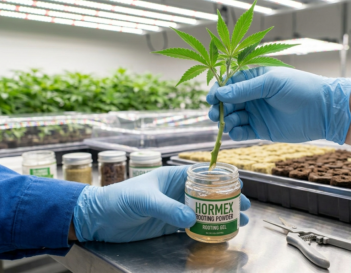
Rooting hormone is an excellent way to boost root development and increase the likelihood that your clones will root. There are many different types of rooting hormone available, ranging from organic to synthetic, and from gel to powder. You only need a small amount of rooting hormone, and a small tub will be enough to cover hundreds of clones.
#5: Lifting the Propagator Lid
One bad habit I often see among growers with clones in a propagator is lifting the lid to let the moisture inside escape. They may do this two or three times a day, which disrupts climate consistency. My advice is only ever to take the lid off to shake away and wipe down any water droplets. Otherwise, keep the lid on and allow the humidity and temperature to remain the same.
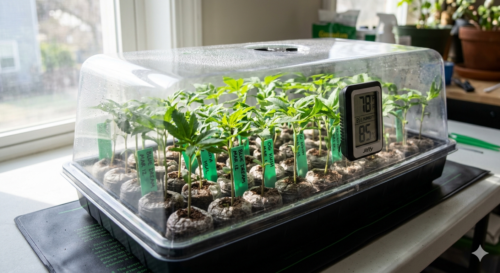
Don’t lift the lid!
#6: Use Hydroponic Bubblers
For all the hydro growers out there, rooting clones in water is much more practical. Bubblers are like deep-water culture for clones, providing the perfect balance of moisture and oxygen to encourage root development. If you are not having much luck cloning using jiffy plugs and a propagator, then why not give bubblers a try?
#7: Plastic Cups and Tape
One of my favorite ways to clone is to use two 6-inch plastic cups. I fill one with 2 inches of a mix of coco, compost, and worm castings, then insert my clone. I cut very small slits in the top of the second cup, give it a light mist with my spray bottle, cover the first cup, and use tape to secure the cups together. Plastic cups are a great, low-cost solution to making a mini propagator.
#8: Cloning Autos
Unlike photoperiods, cloning autoflowers is impractical and a waste of time, as clones will start flowering within a few weeks of rooting. Do not bother cloning autoflowering cannabis plants and only clone photoperiods!
#9: Label the Clones
Always label clones, whether you are using a propagator with a tray inside or the plastic cup method. Sometimes clones can get moved around, and it is easy to lose track of which is which. Label the tray or the cups with waterproof sticky labels to avoid any confusion later.
#10: Light Intensity
Cannabis clones do not require intense lighting, meaning a low-powered LED or CFL will be perfect. Giving your clones too much light may cause growth issues and cause them to transpire too quickly. Give your clones low light levels even after they have developed roots. Once they are more mature, you can consider increasing light intensity and nutrient uptake.
#11: Use Sharp Tools
Creating a clean 45-degree angle when removing the cutting from the plant is very important when cloning. The best way to achieve a precise, clinical cut is to use a sharp scalpel or razor. Scissors work well, if they are blunt, discard them and buy a new pair from the hardware store.
Take your indoor garden further.
If you want structured guidance beyond trial and error, Oaksterdam’s Home Grow course walks you through setting up and running a productive indoor garden from seed to harvest. When you’re ready to turn that experience into job-ready skills, the Live Commercial Horticulture Worker program adds live instruction, hands-on learning, and the practical training you need to step into a professional grow with confidence.
Use code “tark10” at checkout to save 10% on your enrollment in either course.