
Although building a cannabis genetic cultivar library requires space, time, and financial investment, it is critical to the survival of any cultivation operation. Not only does it allow growers to adapt to market demand and remain competitive by quickly bringing new cultivars to market, but it also enables them to preserve critical genetics and even breed the next big market hit.
Types of Germplasm
Germplasm is the term used to describe the genetic resources that make up a cultivar library and come in the form of seeds, clones, or tissue culture explants. Each method has benefits and drawbacks, often depending on space, budget, time, and expertise.
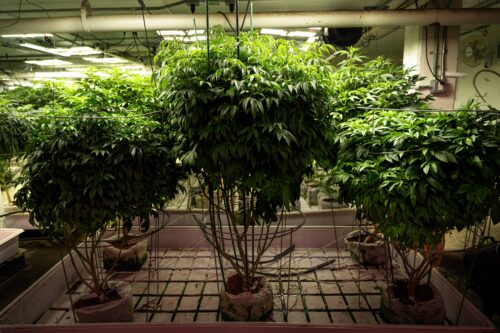
Clones are a reliable way to preserve genetics; some have been kept alive for over 30 years. The biggest drawback and challenge of keeping clones is that they must be cared for in indoor gardens year-round. Mothers in a clone room. Photo: James Loud
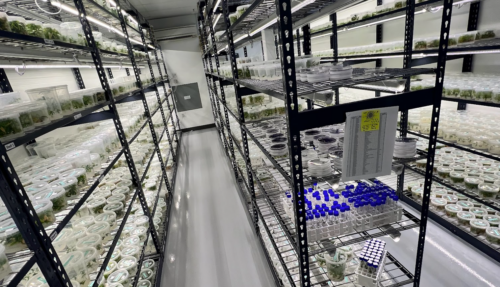
Tissue culture is an optimal preservation method because it allows commercial operations to store thousands of cultivars in a relatively small space indefinitely, as long as they are subcultured regularly. The drawback is that it requires a costly laboratory setup. Photo by James Loud.
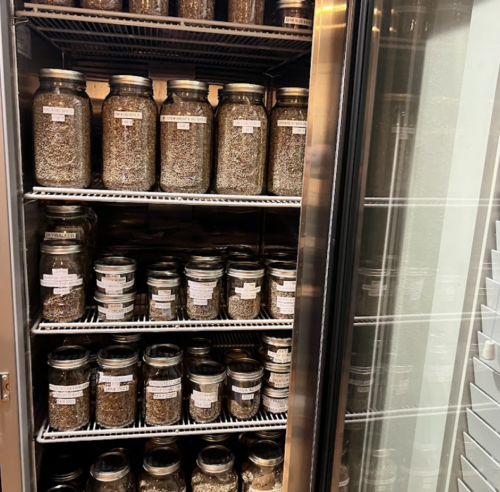
Seeds are the most traditional method of building and maintaining a genetic library. They do not require setup or ongoing care, but proper storage conditions to maintain viability. An estimated 75% of seeds bought at retail are collected and stored rather than germinated. Seeds are the most critical source of genetic diversity and the easiest way of preserving germplasm. Creating and storing seeds must be executed with the same deliberation and precision as cultivating, processing, and storing flowers. Proper labeling and secure storage are essential to help recall genetics in the library. Photo by James Loud.
Tissue Culture is the Future
In week four of our Live Cannabis Breeding Program with James Loud, we explore propagation methods and germplasm, with a special focus on tissue culture for creating and sustaining large libraries in small spaces, and on remediating pathogens and viruses, featuring special guest lecturer Justin Givens of Apical Biotek.
Justin is the CEO and founder of Apical Biotek and Steristarts, with over 30 years in the cannabis industry and a decade in plant biotechnology. He developed and maintains the world’s largest verified clean cannabis germplasm collection and established leading protocols for Hop Latent Viroid (HpLVd) detection and elimination. Working with the USDA, he has legally moved clean plant material across multiple continents through phytosanitary certification. Justin’s work centers on making biotechnology practical and effective for growers—helping the cannabis industry move toward healthier, more consistent, and scientifically grounded production.
Free Breeder’s Kit with Enrollment
Don’t miss your chance to learn how to breed from the world’s greatest breeders and genetics experts, including James Loud, Arjan Roskam, Reggie Gaudino, PhD, Justin Givens, Mark Greyshock, Brian Crocket, and Dale Hunt, PhD. Enroll now and receive a free breeder’s kit from James Loud Genetics.
After completing this six-week certification program, you will understand basic botany and genetics, how to choose breeding strategies, target traits, produce unique cultivars, set up a space, build a genetic library, design a breeding space, and protect your genetics. Enroll now, Get a free kit.